Africa and Middle East Blog

Monday, December 3, 2012

A-F-R-I-C-A


What does that spell??
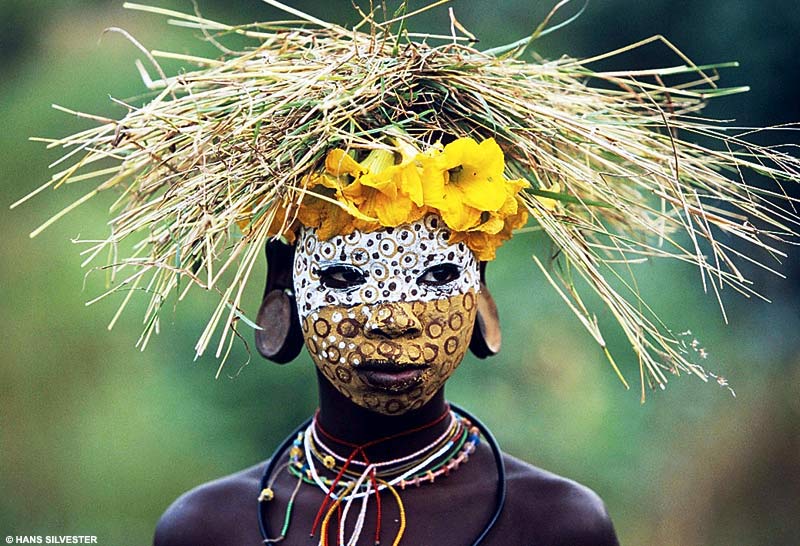
In my mind, these letters stand for the fascinating ancient cultural heritage still influencing the way people there live today.  The strong influences of timeless artwork, music, and beautiful connection of tribal society with nature all struggling to survive in a continent of stereotypical turmoil--the politics of which I know little of. 
This thing--so much more than six letters--will be exciting to discover.

Monday, November 26, 2012

The Lost City...Found in a Hotel

Atlantis
for my Africa and the Middle East class...
http://www.youtube.com/watch?feature=player_embedded&v=-AK_9ZTKKRg

Talk about extreme indulgence.  Relax and have the time of your life if you can swallow the price.  This is the seventeen layer triple chocolate cake of  hotel resorts. 
Atlantis is a hotel on the shore the Palm Jumeirah in Dubai.
On the Atlantis they have 17 different restaurant bars, 166 suites, 1,373 guest rooms, host 65,000 aquatic creatures, a dolphin interaction and learning center, Aquaventure--a waterpark, and an enormous aquarium to greet you as soon as you enter the hotel lobby. 
However, Atlantis has dealt with legal disputes due to failure to honor legal permits in capture and maintenance of its aquatic animals, although it does host an accredited rescue center for the animals.


Wednesday, November 14, 2012

Dear Syrian Freedom Fighter

What would I write to a Syrian freedom fighter??
          If I wrote a letter to a Syrian freedom fighter I would have to apologize, not that it would make anyone feel any better.  I would have to apologize for my own political silence and passivity that has lead to the inadequate aid for their suffering people.  I would have to accept the fact that I have always taken my freedom ungratefully and have never even risen my voice in its defense.  I would simply be sorry.  I am sorry.
          I would also provide some encouragement to counter this depressing introduction.  I would commend all their efforts and reaffirm their sanity in fighting for this worthy cause, since I am sure that some of them are questioning their choice in fighting for what seems to be such an unreachable dream in their current government circumstances.  I would try to give them a glimpse of that kind of freedom as we experience it in America, which would hopefully help them to keep perspective amidst the chaotic revolution.  Just a simple story of experience, such as walking down a street without worry or care with a family member, friend, or pet of my choice, and the very routine schedule of day-to-day life.  Simple pleasures of which many are currently deprived.  I would remind them that because of their efforts today, generations of their prodigy will have a much greater chance at prosperity and happiness. 
          I would lastly caution them not to hastily install a permanent government.  While they may not seek the typical "American democracy," they surely want a government form that is controlled more directly by their countrymen.  This is no mean feat, and should be treated appropriately.  I am certain that Syrians already understand this, but I feel that future regrets will be inevitable.  One precaution against the more devastating regrets is to allow lots of time and to allow changes to be easily made. 
          And then I would not sign my letter personally.  I would leave off at something general, such as "Good luck from a concerned US citizen."  I feel like a non-gender, non-age title would give me more leverage in many Middle Eastern countries, including Syria.  Bias is inevitable.
Sincerely,
           ...

Sunday, November 4, 2012

Israel and Arab States vs. Peace. Peace loses.


          Both Israel and the Arab States have goals of great risk to the other that both parties plan to pursue in the future.  As long as this continues, there can be no peace in the Middle East.  Neither side wants it.
          The entire timeline of Israel's conflict with its surrounding countries has been one of action and escalating reactions.  Whenever a conflict arises, compromise has been purposely avoided.  As evidenced through the first and second Intifada, Palestinians' aptitude to violently protest has consistently been met with vengeful tactics of dominance, leading to increasing death tolls instead of peaceful conduct from one Intifada to the next. 
          The Arab States have not made any monumental changes in their policies toward Israel.  Many still refusing to recognize Israel as a country, these countries have greater focus on the disputable way in which Israel came into existence than the necessity of stabilizing the region.  Israel has already proven itself a force to be reckoned with (especially with U.S. support).  Despite this fact, Israel realizes that their surrounding countries would not hesitate to overthrow them at any sign of weakness.  Obviously, Israel cannot trust the Arab States.
          The tension escalates with Arab recognition of Israel's greater intentions for itself.  Israelis need more land and currently expand their settlements around disputed borders.  The United States chooses to support Israel despite Arab displeasure, and Israel is rumored to possess a nuclear arsenal while the western world deems it unfit for Iran to expand nuclear energy efforts.  The Arab States have no reason to trust Israel or its Western allies. 
          Peace necessitates some (at least small) level of trust.  Clearly neither the Arab States nor Israel are willing to lay aside any self-serving intentions for the sake of peaceful coexistence, and even if peace agreements were made stating this, real events would not reflect those agreements.  I thereby deem peace impossible between these two uncooperative powers for the foreseeable future.

Monday, October 15, 2012

Nuclear Iran?

           Yes, Iranians should be able to benefit from national nuclear advancement programs.  However, at this time the risk is just too high for other countries to chance more chaos of a nuclear scale to penetrate the Middle East.  Especially in a country where the majority realizes its own inability to fairly choose their government.  Iranians are a far cry from their ideal capability to control their own nation's government programs.  Therefore, Iranian youth and citizens themselves should be the first ones "to say that we can't."  
          More easily said that experienced, I know.  In an ideal world countries would happily grant Iran global privileges, and in an ideal world either every country or no country would possess nuclear weapons.  But this does not prove Iran's incapability to continue it's uranium enrichment programs--it only proves the difficulty in negotiations and reaching acceptable compromise.  
          The current Iranian policy wishes not to cooperate with the Western world, nor does it promote negotiations, placing all other countries of power and influence or those countries threatened under decisively defensive behavior.  Iranian officials and people alike simply cannot expect warmer reactions to incredibly dangerous actions.

Monday, October 8, 2012

Iran's New Cyber Army

           I have no doubt that Iran's youth will be resilient to the Iranian government's recent actions to further restrict social interactions through the internet.  They have already proven the great lengths to which they will go in order to exercise passive resistance, and these new restrictions will only serve to further fuel the youths' sense of social injustices and their retaliation.  It would be virtually impossible for the Iranian government to stay technologically advanced enough to prevent most internet access to the youth for any length of time.  However, the decisions and funds facilitating this government actions prove an economical step in the wrong direction.  It makes me question whether or not Iran would financially survive without the black market (sorry, that has a lot of bias.  I'm trying!).  Either way, Iranian youth will continue their social communications with each other and the outside world for as long as they have access to computers.  The most effective actions the regime could make against this would probably be to wipe out the internet cafes. 
          As long as the voices of Iranian youth can be heard throughout the world and within Iran's cyber network there will be hope for change in Iranian policy and perspective.  Even if the Iranian youths' views are not readily accepted by the powers in Iran, eventual change is inevitable as the youth will surely outlive those powers.  Granted that no one wants to live half of their life under oppression and restriction, the youth seek to bring about that change as soon as possible and without violence.  The internet is the best communication network available to orchestrate mass peaceful protest and plan group action with the fewest hindrances.  Global connections will also help the Iranian youth to gain perspective and know the best course of action once a revolution takes place.  One revolution already had a poor outcome because of this lack of foresight--hopefully the new use of cyber networking will prevent a repetition in history. 
          With the Iranian regime's new "cyber army" in mind, I am forced to realize the great internet priviledges that I previously took for granted.  Obviously freedom in using the internet has its social drawbacks--porn, bullying, harassment, identity theft, and other crimes--but these are more than compensated for by the positive aspects that we experience on a day-to-day basis.  Knowing the political capabilities that the internet provides to Iranian youth, I now view the internet a tool with great potential rather than another electronic waste of time.  If United States youth possessed the same political drive that the Iranian youth do, just think of the great changes that we could bring to our own faulty politics. 

Saturday, September 29, 2012

Black and White and Blurry

In the classroom we watched a very intriguing and revealing video called Persepolis to gain another view of Iran through the youth of the revolution.  We have been reading Children of Jihad as well, which gives a modern perception of the youth and Iranian culture; however, the author's discoveries are not as potent as the direct experiences of an Iranian youth in multi-media form.  Therefore, my own perception of Iran--its government, history, culture, and people--has been monumentally changed by the simple experience of a classroom-projected movie. 
          I feel that I would consider an unreliable government (or at least one that is exceedingly ureliable and dangerous) almost normal if I were the protagonist of Persepolis.  I would have to learn the tricks of dodgeing nonjudicious punishment and the trades of the black market, possessing no scale of innocence often associated with childhood or adolescence in the Western world.  However, the most pungent difference from how my own Western life has been would be the knowledge that I would not have the liberty to protest any abhorrent restrictions in the present or future at the possible risk of my life.  I, already shy and anxious at the very thought of failing expectations, would be completely governed by fear--no need for the revolutionary guard that I know would be there to catch me in any stray move.  Personally, I love rules (for the most part) in my own reality simply because I need something black and white to help base my own guidelines off of.  In Iran just after the revolution (especially during the eighties), my current role of rules would be totally misplaced.  I cannot imagine neither bending over backwards to obey Iranian law nor escaping the law "by the skin of my teeth" to exercise the rights that I believe should be government protected.  Nor could I imagine holding even more pessimistic opinions when it comes to politics :). 
          From chador to segregation, I think I could manage the social restrictions through childhood.  It would only be when I became aware of my miniscule allowances as a woman that I would discover how psychologically crippling the suffocation of freedom can be. 

Monday, September 17, 2012

My Short-sided View

For my amazing, four-person class of Africa and the Middle East, I was asked to post what my view is of the Middle East and how my background has influenced that view.  This request is impossible to fulfill without confronting extreme bias often and rather truthfully stereotyped to United States citizens.  When is this more obvious or heart-wrenching than just after 9/11?
           Looking across the wide expanse of American ideals too often taken for granted (and of course the Atlantic Ocean, Europe, and the Mediterranean), I see revolution, religion, and rage pervading from what presently seems to be the world's center of international conflict.  Riddled pasts of dictatorship, greatly divided classes of wealth, and the over-publicized terrorism skunk up the ocean breeze on United States coasts, but lately I have been doubting my nose.  The true definition of a weed is simply an unwanted plant.  While I may see a cultivation of strange flowers and crops from afar, how differently must the planters see their garden.  So as I crane my neck and stretch my eyes, I never expect to see the perfect image of Middle Eastern society with all the experiences of love, life, and government.  Instead I fill my queries with second- or third-hand reports of terror, extreme wealth and poverty, unstable government, and more developing questions of whether or not the news feeds even resemble the truth. 
          While the world and news of it is such that I feel I can not have any opinions that truly reflect my own beliefs, I will take a guess at the hidden truths behind all things perceived from this hazy region.  The Middle East clearly has its own strong foundation of religion and culture at total odds with the Western world.  I think that the Middle East is an enigma to Western Society because they are the first successful and sustaining threat to core Western beliefs.  The culture there is becoming more and more modern, but in a completely different way than Western powers can predict.  Middle Eastern culture grows and develops into democratic government in a completely threatening environment, with many "helping" countrys' cultures clashing and influencing the Middle Eastern culture in potentially negative ways.  Any perceived "attack" will undoubtedly provoke an impressive counter attack when the whole of society lives on the defensive side at all times.  I experience this all the time with an overreacting sister who feels that her unfortunate position as "baby of the family" is constantly being threatened or accused.  In the case of Middle Eastern countries, their reactions to defend entire ways of life are appropriately exponential in this silly comparison. 
          So how exactly do I interpret the Middle East?  I see the region, knowing that I slant my views even to group these different countries into one subject, as an adolescent revolution where people are expressing their voices, holding onto the fundamental beliefs of their "childhood," and adapting into what will soon be powerfully influential countries of unique and prominent culture. 
AGUAMAN!!